What Makes The Global City’s Location Stand Out in Eastern Ho Chi Minh City?
For a 117.4-hectare township, location should not be assessed simply by asking, “How many minutes does it take to reach the city center?” For buyers considering The Global City, the more practical questions are how the
For a 117.4-hectare township, location should not be assessed simply by asking, “How many minutes does it take to reach the city center?” For buyers considering The Global City, the more practical questions are how the development connects to major transport corridors, how convenient daily travel to Thu Thiem and central Ho Chi Minh City is, and how many everyday needs can eventually be met within the township itself.
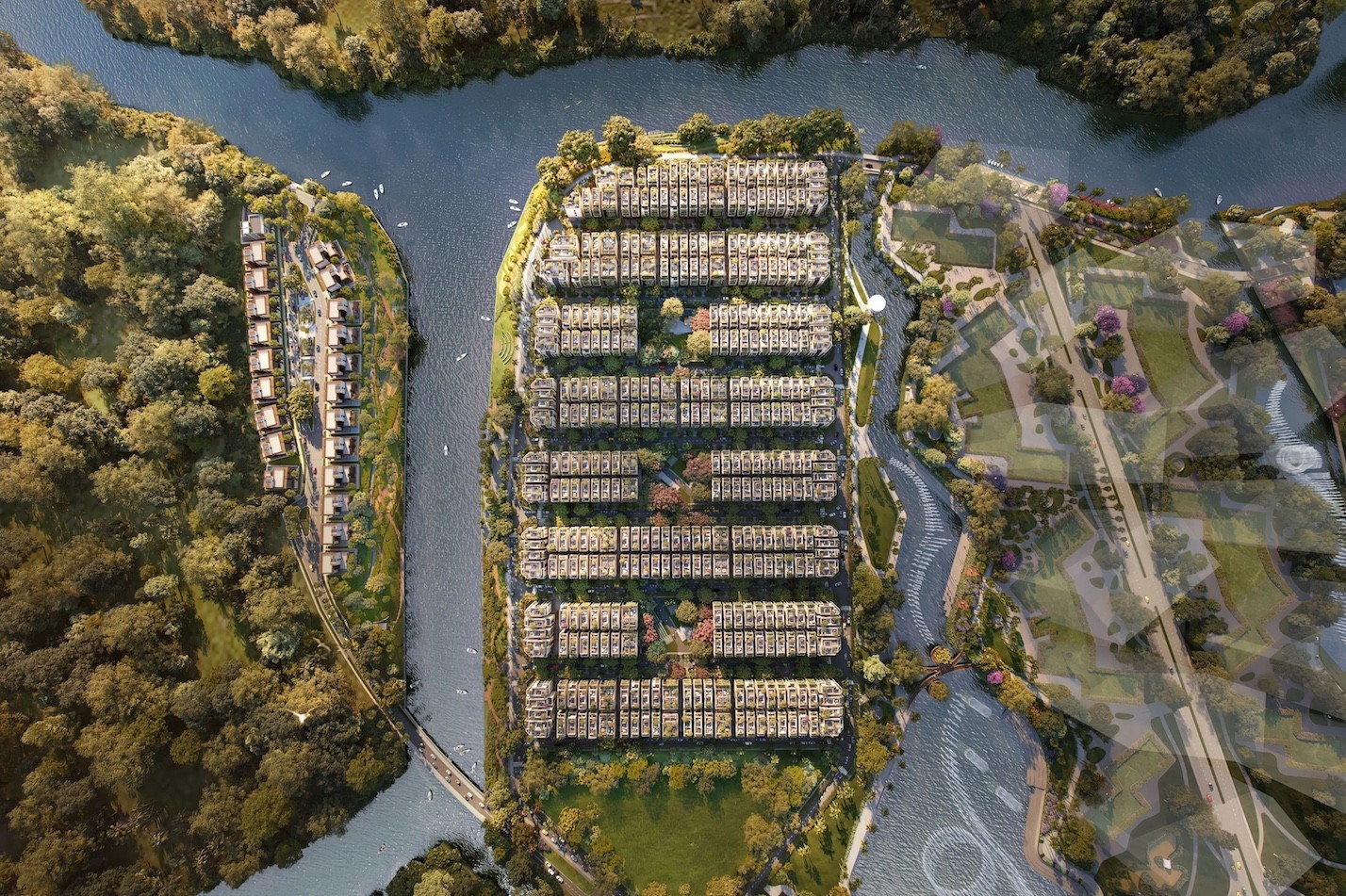
The Global City is located along Do Xuan Hop Street in Binh Trung Ward, Ho Chi Minh City. Its position between Do Xuan Hop Street, the Ho Chi Minh City – Long Thanh – Dau Giay Expressway and the Rach Chiec River gives the township access to several important directions across eastern Ho Chi Minh City.
For residents, however, the value of this location is not only about getting out of the township quickly. The scale of The Global City means that as its residential, commercial, educational, healthcare and recreational components continue to take shape, residents may be able to handle more of their daily activities without leaving the development.
Where is The Global City located?
The Global City covers approximately 117.4 hectares in Binh Trung Ward, Ho Chi Minh City, with its main frontage along Do Xuan Hop Street.
The township is bordered by Do Xuan Hop Street to the east, the Saigon Sports City area to the west, the Ho Chi Minh City – Long Thanh – Dau Giay Expressway corridor to the south, and the Rach Chiec River to the north.
These boundaries matter because The Global City does not rely on a single transport direction.
Do Xuan Hop serves as one of the main roads connecting the development with the broader eastern urban area. To the south, the expressway provides an important regional corridor toward Dong Nai and Long Thanh. Meanwhile, the Rach Chiec River creates a waterfront edge that also plays a role in the township’s landscape planning.
For a development of more than 100 hectares, internal location is equally important. The distance from an individual apartment, townhouse or villa to the main entrances, commercial streets, parks and other facilities can significantly affect daily convenience.
In other words, two properties within The Global City may share the same project address but offer different living experiences depending on where they are located within the master plan.
Which transport routes shape The Global City’s connectivity?
Do Xuan Hop is one of the most important access roads because it connects directly to the township and the wider road network of eastern Ho Chi Minh City.
Lien Phuong Street is another significant connection. The route through The Global City toward Mai Chi Tho and Vo Nguyen Giap provides residents with an additional way to reach major east–west corridors instead of depending entirely on existing routes.
From Mai Chi Tho, residents can continue toward Thu Thiem and central Ho Chi Minh City. In the opposite direction, the Ho Chi Minh City – Long Thanh – Dau Giay Expressway provides access toward Dong Nai and the Long Thanh area.
An Phu Interchange is another key part of this transport network. However, buyers should distinguish between planned connectivity and actual road conditions at the time of purchase. As of August 2026, the interchange remains under construction rather than being fully completed.
This is particularly relevant during peak hours, when construction activity and high traffic volumes around the eastern gateway can affect travel times.
The Global City therefore has access to several major transport corridors, but the practical benefit should be evaluated together with current traffic conditions rather than based solely on distance on a map.
How convenient is travel from The Global City to Thu Thiem and central Ho Chi Minh City?
For residents working in Thu Thiem, the Do Xuan Hop – Lien Phuong – Mai Chi Tho corridor is one of the most relevant routes.
Once on Mai Chi Tho, residents can continue toward Thu Thiem or connect to other major roads leading into the central districts of Ho Chi Minh City.
This makes The Global City particularly relevant to people whose daily activities are concentrated in Thu Thiem or eastern Ho Chi Minh City.
For those who work in the traditional city center, the journey is naturally longer than living directly in central Ho Chi Minh City. The practical question is therefore not simply how many kilometers separate the two locations, but how the route performs during the hours when residents actually commute.
Anyone considering The Global City for owner-occupation should ideally assess the route during morning and evening peak periods rather than relying on ideal travel-time estimates.
In the other direction, proximity to the expressway provides a clearer advantage for people who frequently travel toward Dong Nai, Long Thanh and other parts of the Southeast region.
Can living in The Global City reduce the need to travel outside the township?
This is one of the more important aspects of The Global City’s location.
When buying an apartment in a standalone development, residents may still need to travel elsewhere for major shopping, education, healthcare, dining or entertainment. A large integrated township is designed around a different model: bringing more daily activities into the same urban environment.
The Global City is planned with residential areas, commercial spaces, schools, healthcare facilities, parks, restaurants, cafés, entertainment areas and community spaces.
The development also includes a substantial network of landscaped and waterfront areas, including its canal and spaces along the Rach Chiec River.
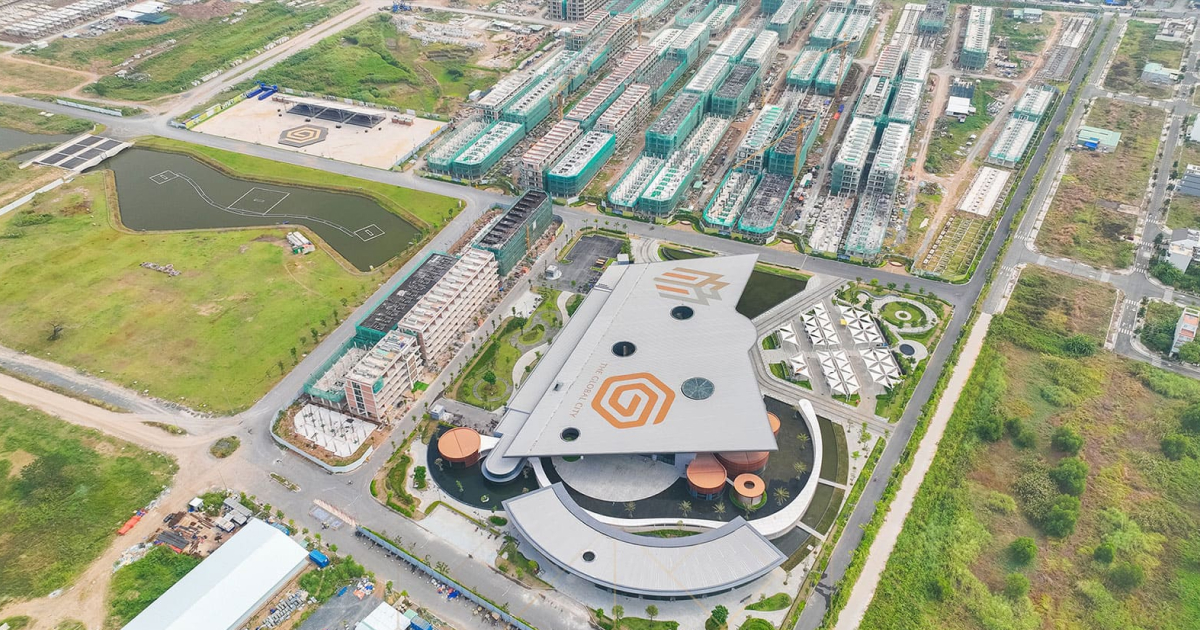
SOHO has already introduced a townhouse and commercial component to the township, while high-rise residential developments are adding a different type of housing supply. Other facilities and components will continue to develop as the township progresses.
For residents, the practical value is straightforward. If dining, shopping, recreation and eventually more educational and healthcare needs can be handled within the township, the number of small daily trips outside the development can be reduced.
For families with children, this can be particularly relevant. The shorter the distance between home, school, parks, shops and everyday services, the easier it can be to organise daily routines.
This is one of the main differences between evaluating the location of an integrated township and evaluating a standalone residential project. The value is not only in “how quickly can I leave?” but also in “how often will I actually need to leave?”
What should buyers still consider about The Global City’s location?
The first consideration is traffic.
The An Phu area remains an important bottleneck for eastern Ho Chi Minh City, particularly during peak periods. With the interchange still under construction as of August 2026, buyers should account for actual traffic conditions rather than assuming the completed infrastructure scenario.
The second consideration comes from the scale of The Global City itself.
A 117.4-hectare township cannot become fully operational at the same time. Different precincts may therefore have different levels of completion, occupancy and commercial activity.
Living in a completed section can provide a different experience from owning a property next to an area that is still under construction.
The same applies to amenities. Facilities shown in the overall master plan should not automatically be treated as operational amenities in August 2026. The value of the integrated-city model will become clearer as more components are completed and put into use.
Finally, buyers who regularly work in western, northwestern or southern Ho Chi Minh City should calculate their commute carefully. Internal amenities may reduce trips for shopping and recreation, but they do not eliminate a long daily commute if the workplace is on the opposite side of the city.
Who is The Global City’s location more suitable for?
The location is particularly relevant to people working in Thu Thiem, eastern Ho Chi Minh City or along the Mai Chi Tho – Ho Chi Minh City – Long Thanh – Dau Giay Expressway corridor.
Families looking for an integrated urban environment may also find the location more suitable than buyers whose priority is simply being as close as possible to the traditional city center.
Another group includes residents who want to reduce the number of daily trips by having more shopping, recreation and community facilities within the same township.
For townhouse and shophouse buyers, the location question is somewhat different. Instead of focusing only on access to central Ho Chi Minh City, they also need to examine internal pedestrian and vehicle flows, proximity to commercial streets and the level of activity around each property.
What Can Buyers Choose at The Global City?
The Global City now includes several distinct property categories, meaning buyers are not choosing only between different sizes of the same residential product.
SOHO represents the townhouse and shophouse segment. These properties are more relevant to buyers who want to combine property use with commercial activity. For this segment, frontage, position within the commercial streets and access to visitor flows can be as important as the overall location of The Global City.
SOLA Peninsula takes a different approach. Covering approximately 9.86 hectares, SOLA is planned as a villa compound with linked houses, semi-detached villas, detached villas and boutique shops. One of its defining characteristics is its three-sided waterfront setting, combined with five internal parks.
As a result, SOLA is more relevant to buyers seeking low-rise housing, larger living spaces and greater privacy within The Global City rather than prioritising street-level commercial activity. The precinct is expected to be handed over in the fourth quarter of 2026.
The high-rise segment provides another option. Developments such as Masteri Cosmo Central and LUMIÈRE Midtown cater more directly to apartment buyers who want access to The Global City’s wider ecosystem without requiring the space, maintenance or substantially larger capital commitment associated with a townhouse or villa.
Viewed by purpose, the current product mix can therefore be divided into three broad directions: apartments for urban residential needs, SOHO for townhouse and commercial-oriented use, and SOLA for lower-density waterfront living.
The Global City Properties Currently Drawing Interest on Linker
Listings on Linker currently include properties across SOHO as well as high-rise developments within The Global City. Asking prices should be understood as prices advertised by individual sellers at the time of listing, not confirmed transaction prices.
Within SOHO, buyers can find townhouses and shophouses with different plot sizes, frontage positions and commercial characteristics. These products are more relevant to buyers looking for larger properties or considering a combination of residential and commercial use.
SOLA adds another low-rise category to the township. Buyers considering this precinct should pay particular attention to the individual property's relationship with the waterfront, internal parks and access points, as these characteristics can affect both daily use and how different properties are positioned within the precinct.
In the apartment segment, Masteri Cosmo Central currently offers units ranging from one-bedroom to larger family layouts on Linker. This segment may be more suitable for buyers whose priority is living within The Global City while keeping property operation simpler than a townhouse or villa.
Rather than using one listing to represent the entire development, buyers can compare the available inventory through the The Global City property listings on Linker and assess individual products according to property type, size, internal location and asking price.
The Global City Project Information
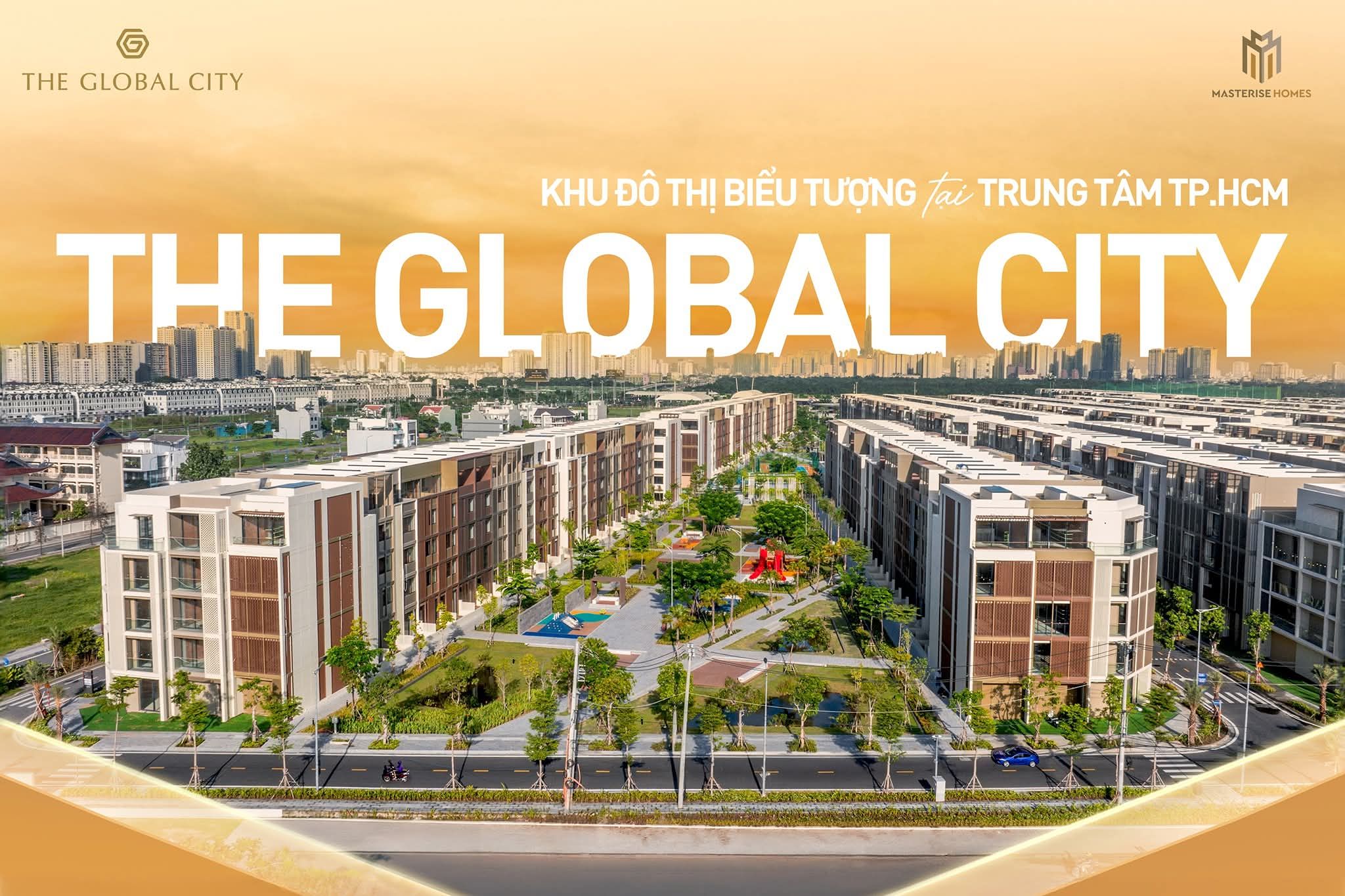
The Global City is a 117.4-hectare integrated township located along Do Xuan Hop Street, Binh Trung Ward, Ho Chi Minh City, and developed by Masterise Homes.
The master plan is being developed in multiple phases and includes apartments, townhouses, shophouses, villas, commercial facilities and public spaces. The overall development is planned with a construction density of approximately 28%, with the wider township expected to continue toward completion around 2028.
From a location perspective, The Global City’s main advantage is not simply proximity to an expressway or access toward Thu Thiem. Its practical value comes from the combination of regional connectivity and a township large enough to accommodate a significant share of residents’ everyday needs.
At the same time, buyers in August 2026 still need to consider current conditions. An Phu Interchange is not yet fully completed, peak-hour traffic remains relevant, and different parts of the township are at different stages of development.
For that reason, the more useful question is not simply whether The Global City has a “good location.” Buyers should consider whether its location fits their workplace, daily routine and preferred property type — whether that means an apartment, a commercial townhouse at SOHO, or a lower-density home at SOLA Peninsula.