


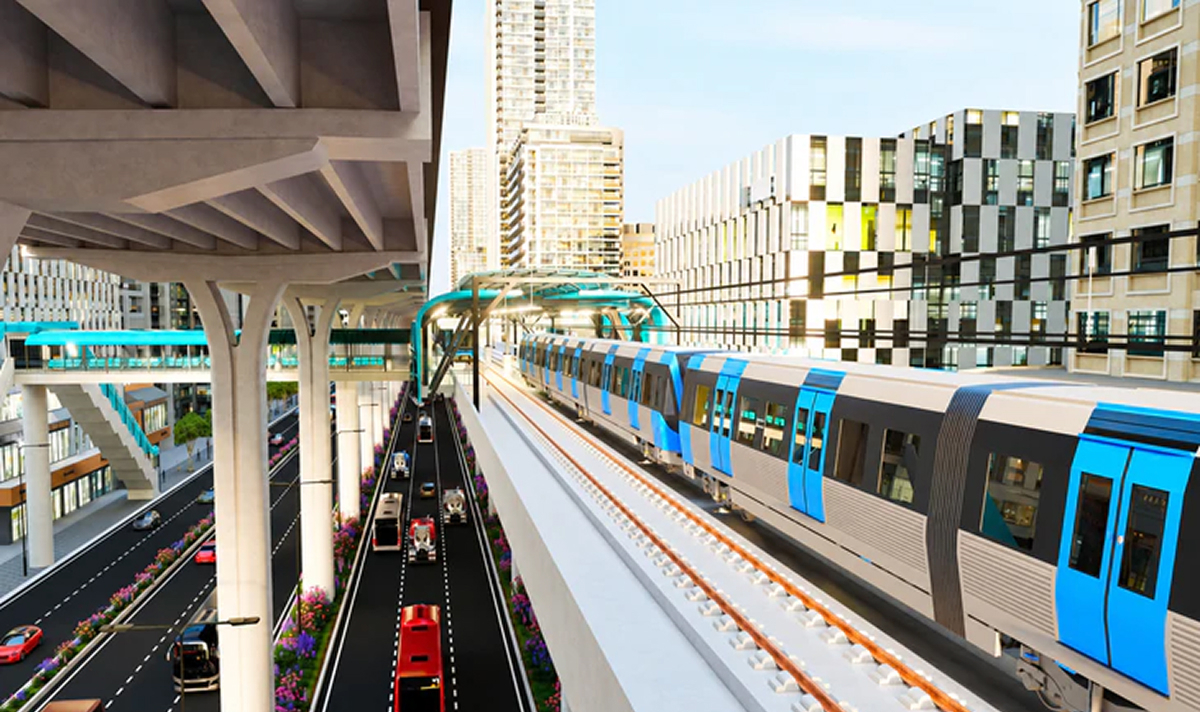
THU DAU MOT – HO CHI MINH CITY METRO LINE 2: A NEW 33.2 KM CONNECTION TO THE CITY CENTER
Ho Chi Minh City's approval of the alignment for Metro Line 2 from Thu Dau Mot to central HCMC marks another important step in expanding the city's urban railway network. The approximately 33.2 km metro line will
Ho Chi Minh City's approval of the alignment for Metro Line 2 from Thu Dau Mot to central HCMC marks another important step in expanding the city's urban railway network. The approximately 33.2 km metro line will connect the former Binh Duong area with central Ho Chi Minh City, with construction expected to begin in December 2026.
Beyond providing a new transportation option, the project is expected to improve connectivity along National Highway 13, support urban development, and gradually establish an integrated public transportation network across the expanded Ho Chi Minh City.
METRO LINE 2: A NEW CONNECTION BETWEEN BINH DUONG AND CENTRAL HCMC
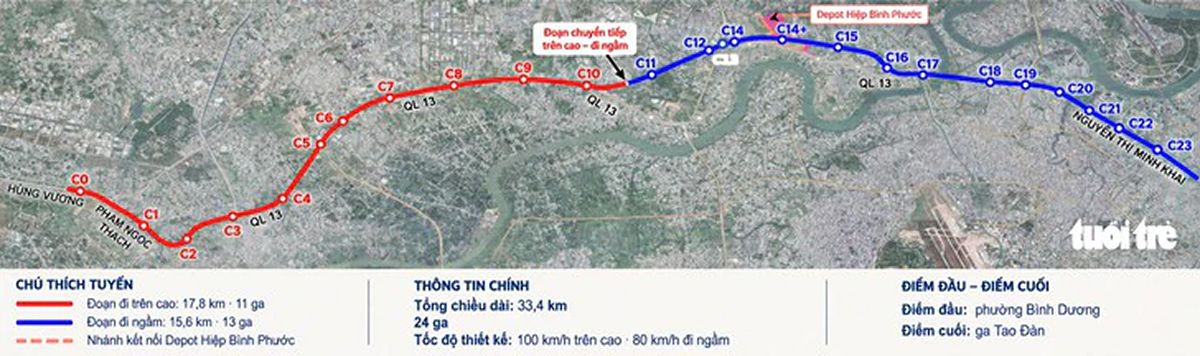
Under the recently approved alignment, Thu Dau Mot – HCMC Metro Line 2 will have a total length of approximately 33.2 km, including 17.8 km underground and the remaining section elevated.
The line will begin near S5 Station of Metro Line 1's Binh Duong New City – Suoi Tien section, on Hung Vuong Street. Its final stop will be C23 Station at Tao Dan Park, connecting with the Ben Thanh – Tham Luong section of Metro Line 2.
The project will feature 24 stations, including 11 elevated stations from C0 to C10 and 13 underground stations from C11 to C23. The approximately 26.8-hectare Hiep Binh Phuoc Depot will serve as a facility for train maintenance, repairs, and storage.
Once operational, the metro line is expected to provide more travel options between residential areas, commercial centers, and employment hubs along the Binh Duong – HCMC corridor.
NATIONAL HIGHWAY 13 BECOMES PART OF THE METRO NETWORK
The approved alignment reinforces the important role of National Highway 13 in connecting the former Binh Duong area with central Ho Chi Minh City.
Starting from C0 Station on Hung Vuong Street, the line will pass through Pham Ngoc Thach Street, Thanh Le Park, and Binh Duong Avenue. After crossing Ring Road 3, it will continue past Becamex International Hospital and Lotte Mart Binh Duong before transitioning underground near the Vinh Phu 2 residential area.
The following section will pass through the Binh Duc area, Thu Duc Wholesale Market, Hiep Binh Street, and Van Phuc Urban Area before joining the National Highway 13 corridor.
After C17 Station, located near the intersection of Pham Van Dong Street and the North–South National Railway, the line will travel underground beneath the Saigon River. It will then follow Xo Viet Nghe Tinh and Nguyen Thi Minh Khai streets toward central HCMC.
The final stations will serve the Hang Xanh area, Hoa Lu Sports Center, Youth Cultural House, and Tao Dan Park.
With this alignment, Metro Line 2 will not only connect two major urban areas but also serve numerous existing residential neighborhoods and service centers along the route.
INTERCHANGE CONNECTIONS ARE A KEY FEATURE
In addition to its 33.2 km length, one of the project's most important features is its planned integration with other metro lines.
According to the approved planning direction, Thu Dau Mot – HCMC Metro Line 2 is expected to connect with:
- Metro Line 1, Binh Duong New City – Suoi Tien section, at the C0/S5 station area.
- Metro Line 4 at C5 and C22 stations.
- Metro Line 10 at C13 Station.
- Metro Line 6 at C17 Station.
- Metro Line 2, Ben Thanh – Tham Luong section, at Tao Dan Station.
These interchange points will allow passengers to transfer between lines and reach different parts of the city once the metro network is completed.
Rather than serving only one transportation corridor, the project will become an important part of Ho Chi Minh City's integrated public transportation system.
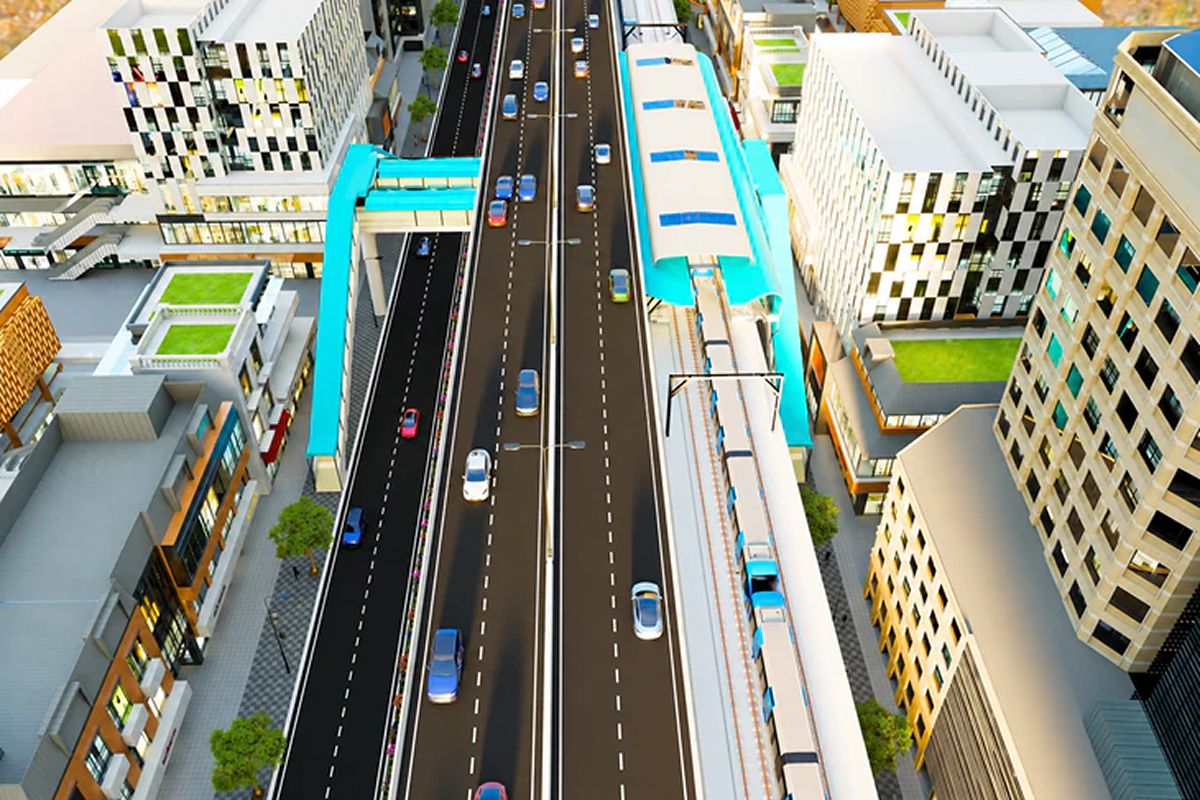
NEW URBAN DEVELOPMENT OPPORTUNITIES ALONG THE METRO LINE
The new urban railway could create additional development opportunities for areas along National Highway 13.
In particular, existing residential neighborhoods and urban developments with convenient access to metro stations may gain improved transportation connectivity once the project is completed.
The metro line also creates opportunities to explore Transit-Oriented Development (TOD), where housing, commercial activities, services, and amenities are planned around public transportation hubs.
For the real estate market, the key consideration is not simply whether a property is located near the metro alignment. The actual distance to the nearest station, road accessibility, and surrounding infrastructure are equally important.
Therefore, the impact of the metro should be evaluated based on the specific conditions of each area rather than assuming that proximity to the line will automatically increase property values.
CONSTRUCTION EXPECTED IN DECEMBER 2026, TOWARD A 255 KM METRO NETWORK
Construction of Thu Dau Mot – HCMC Metro Line 2 is expected to begin in December 2026, alongside Metro Line 1's Binh Duong New City – Suoi Tien section and Phase 1 of Metro Line 6, connecting Tan Son Nhat and Phu Huu.
These projects form part of Ho Chi Minh City's plan to develop eight metro lines by 2030, bringing the total network length to approximately 255 km, including the existing 19.7 km of operational Metro Line 1.
As the lines are developed and interconnected, the urban railway system is expected to expand public transportation coverage, support better urban planning, and reduce dependence on private vehicles.
For the National Highway 13 corridor, Thu Dau Mot – HCMC Metro Line 2 represents an important infrastructure project in the transition from a traditional road-based transportation corridor toward an urban corridor supported by high-capacity public transit.